Featured post

Press Release: Release of second edition (digital) of ‘Less than Gay’ – A Citizens’ Report on the status of Homosexuality in India

    The AIDS Bhedbhav Virodhi Andolan (ABVA) is releasing the second edition of ‘ Less than Gay ’ – A Citizens’ Report on the status of Homo...

Monday, 10 February 2020

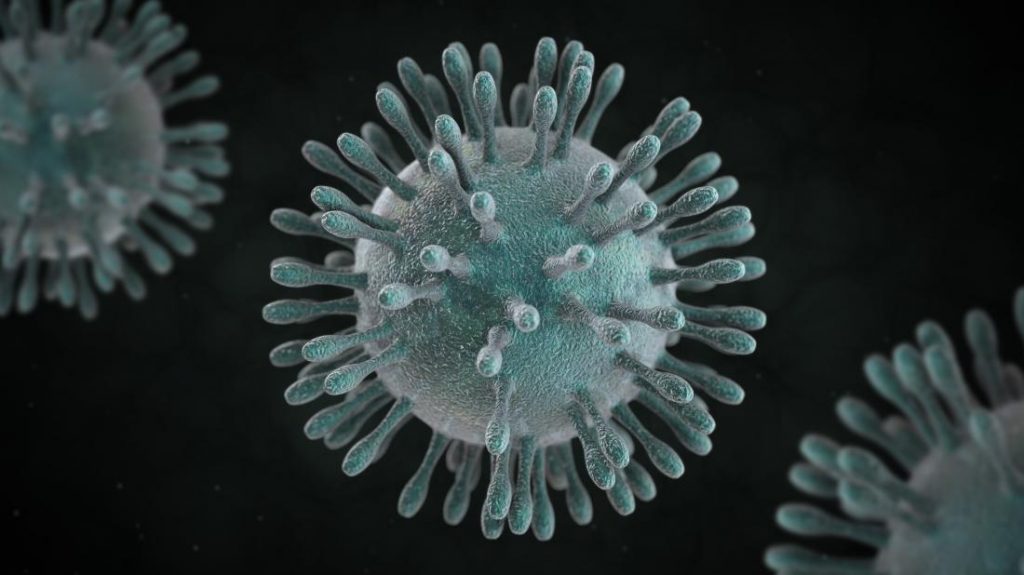
Indian Health Authorities Plan To Treat nCoronavirus Positive Patients As Guinea Pigs By Experimenting With Anti-AIDS Drugs. Resist it

“Damned philistino-medico
Student crew
The whole world’s just
A bag of bones to you
                 – Karl Marx
Media reports (Millennium Post, 6 February, 2020) indicate:
“The Drug Controller General of India has approved the “restricted use” of a combination of drugs used widely for controlling HIV infection in public health emergency for treating those affected by novel coronavirus (nCoV), official sources said on Wednesday.
According to government sources, apex health research body Indian Council of Medical Research (ICMR) had sought an emergency approval from the DCGI for the “restricted use” of the combination of two medications – lopinavir and ritonavir – for treatment of this respiratory ailment.”
There is no need to resort to irrational use of untested medicines. Isolation of nCoV positive patients at home/hospital is sufficient to tide over the epidemic; there is no preventive vaccine or curative medicine available. But that does not permit doctors to throw ethics to the wind; and bury the Hippocrates oath six fathoms deep. The ICMR would – rather should – know that there is the long, necessary process before a green signal is given for a drug to be used on patients afflicted by a hitherto unknown disease. It is expressly forbidden to use a drug meant for one ailment for another new disease without the necessary clinical trials – in test tubes, on experimental animals and then human trials. There is no short cut.
It may be recalled that when the AIDS pandemic arrived, drugs meant for cancer discovered in 1960s were being touted as treatment for HIV+ people!! Presently drugs meant for other viral outbreaks are being advocated for the nCoV epidemic. These drugs may still work eventually but the necessary trials cannot be bypassed. Science should not replaced with quackery/magic craft.
In this whole endeavour the role of preventive vaccines and medicines gets overstated. Recall that the very first vaccine – BCG vaccine – made available in allopathy was for tuberculosis (TB). Its efficacy was proved in 1921; the first drug, streptomycin to be used against TB was discovered in 1944. Yet this disease has not been eradicated till date. Walksman who discovered streptomycin was awarded a Nobel prize for medicine in 1952 and he authored a book in 1965 titled ‘The Conquest of Tuberculosis’; 55 years later Walksman – posthumously – though has to eat a humble pie. The people of USA were in for a rude shock when TB reappeared there consequent to the AIDS outbreak in 1980s. A large number of people died in USA due to inter alia lung TB, fungal infection of lungs as a consequence of HIV infection leading to AIDS. No one had envisaged that a viral infection with HIV would lead to reemergence of TB caused by a bacteria. In fact in 1980s TB re-emerged in most countries of the world. In 1993 the WHO declared TB to be a global emergency. So much for the conquest of TB as prophesized by a Nobel Laureate. Keep in mind that the bacteria causing TB was discovered in 1882!
The discovery of medicines/vaccines does nor necessarily eradicate the diseases for which the discoveries were made. It would be wise for the medical personnel to indulge in masterly inactivity in the wake of newer epidemics appearing in the future; of course the bare basic scientific principles would have to be followed in many such futuristic situations. Men and women trained in scientific methods should not let the ‘primordial fear’ surface from there subconscious mind; because that would signal the end of enquiry into truth.
Meanwhile media reports indicate that consent of nCoV patients would be taken to administer drugs which have not been subjected to clinical trials earlier. But what is the value of consent obtained from patients who are quarantined/detained without even a specific law in existence? Cases have been reported in India where policemen have witch-hunted, targeted, searched for specific people and then forcibly quarantined and tested them for nCoV. What about the civil liberties and democratic rights of these people? All this is allowed to happen when hardly anything is known about the nCoV – not even its incubation period; there is no certainty whether bats, snakes or something else is the culprit; who knows that apart from the nCoV there is a hitherto undiscovered co-factor and the two together cause the disease.
In India majority of those detained would have been unnecessarily quarantined. Would the State compensate them? Besides there is a question of side effects of the untested drugs planned to be used on nCoV positive patients. No one knows for long these are to be continued.
The MNCs are salivating all over as health authorities – and not just in India – have been pressurized to administer untested drugs. There is additionally a rat race amongst scientists in the best of the research institutes world wide to discover a vaccine or curative medicine for the nCoV so that their respective lobbyists could get a head start in planning for the nomination for the next Nobel prize in medicine.
Ivan Illich was right. The biggest threat to the health of the people is from the medical profession.
[Dr. P. S. Sahni, member ABVA; Senior Research Fellow, ICMR:1981-82, posted at Safdarjung Hospital, New Delhi; Research Associate, ICMR 1982-83, posted at All India Institute of Medical Sciences, New Delhi. Email: aidsbhedbhavvirodhiandolan@gmail.com]

Saturday, 1 February 2020

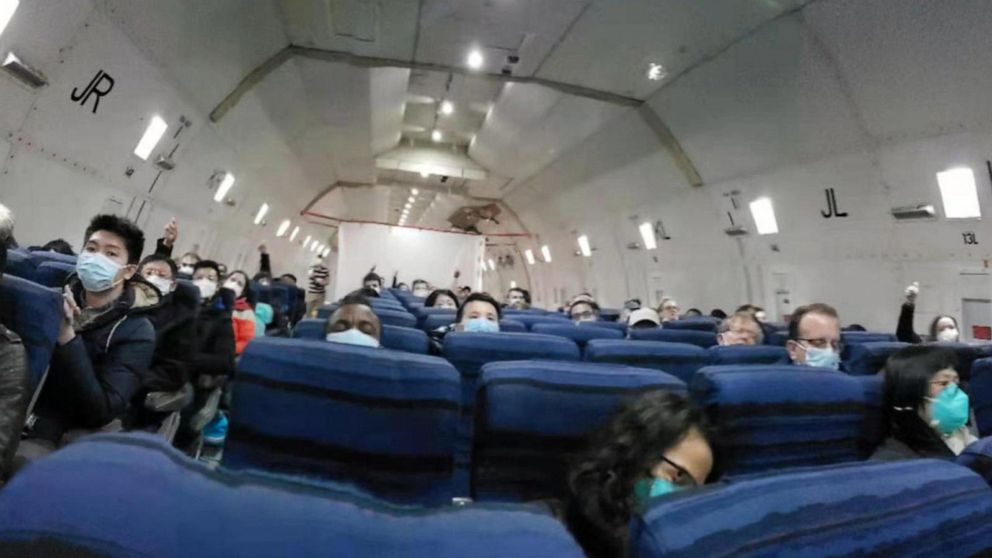
Has The International Medical Establishment Learnt Anything At All From Management Of Past Epidemics? If So, Why This Panic Evacuation From China?

“The study of the evolution of disease patterns provides evidence that during the last century doctors have affected epidemics no more profoundly than did priests during earlier times. Epidemics came and went, imprecated by both but touched by neither. They are not modified any more decisively by the rituals performed in medical clinics than by those customary at religious shrines. Discussion of the future of health care might usefully begin with the recognition of this fact.”
                  – Ivan Illich, Limits to Medicine, Medical Nemesis: The Expropriation of Health, 1974
The epicentre of the coronavirus epidemic in China is Wuhan, a city of eleven million people. All that needs to be done has already been done by the Chinese authorities – at the level of medical, political, military establishments. The measures adopted are so simple that you don’t need facilities ordinarily available in the best of the hospital anywhere in the world. This is a moment of reckoning for all the allopathic medical doctors, their associations and the government medical structure all over the world to stand up and take a stance that no evacuations are needed from Wuhan. This simple principle is taught in third year MBBS studies in medical colleges all over the world. Why is the medical establishment participating in a panic reaction?
The politicians have a reason to be seen to be doing something for the respective citizens of their countries in a show of aggressive nationalism. This stance of politicians does not have an iota of scientificity. Why is this not being opposed by WHO? True the WHO will say that it is not a super national government. But it could at least hourly issue the advice that evacuation from Wuhan should not be undertaken. As of now only the Chinese authorities are seen to be working with a scientific temper. Even within the area of epicentre what people need to be doing is wearing a mask and washing hands with soap as and when necessary. The suspected source of the virus viz flesh of exotic animals and birds has already been taken care of by municipalities in Wuhan province.
I worked during the cholera epidemic in 1971 at the Indo-Bangla border as volunteer medico for three months; as also during the national smallpox eradication program in Bihar in 1974 for three months under a WHO program. Also as part of a team I worked in Delhi during the cholera epidemic of 1988 and brought out a document titled “Crime Goes Unpunished”; around 1500 people had died in that epidemic.
I was member of ABVA, the first voluntary group in India which worked on the AIDS epidemic head on in 1988. I have the basic principles of managing epidemics very clear in my mind. In fact the best time to show how unscientific the medical establishment behaves is when it deals with a fresh epidemic and that time is now when the unprecedented panic reaction is being witnessed wherein the most developed nations are evacuating their citizens from Wuhan.
For instance why is the CDC, Atlanta not telling the Trump administration not to indulge in this buffoonery. Were it not the tragedy accompanying the epidemic one would have said that the white coated medical professionals outside China are colluding in the comical opera staged by third rate politicians whose sole aim – with an eye on the next election – is to create an illusion amongst the masses that they are bringing their citizens back to their homeland rescuing them from the from the jaws of death. This is absolute bullshit.
Going by the track record the political establishment will have its way world wide and medical establishment will keep its mouth shut just as it did during the Nazi regime! The evacuation process would continue unabated. The irony is that Indian government wants to evacuate large number of Indian medical students studying there; in fact their services should be utilised in Wuhan during the ongoing epidemic.
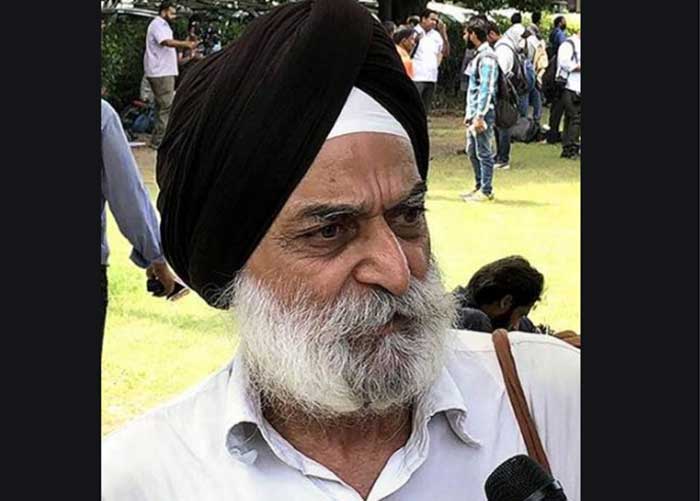
[Dr. P.S. Sahni is an Orthopaedic Surgeon and a member of PIL Watch Group & AIDS Bhedbhav Virodhi Andolan. Email: pilwatchgroup@gmail.com]

Saturday, 4 January 2020

A Middle Class Professional Could Joyfully Consume Less, Comfortably Save More, Share Liberally & Be In Activism. A Lived Experience

Early this year it was learnt that after 17 years of its existence Countercurrents.org (CC) – which has performed a stellar and useful role – was on the verge of closure. There was said to be a shortfall of Rs. 4 lakhs (USD 6000/- approx.) for its minimal requirement of Rs. 10 lakhs (USD 14,000). And that, too, just for its bare survival! One still does not know how the Editor, Binu Mathew, the other team members and their families at CC survive. Binu left his regular job as a journalist to devote full time to CC. The team continues to work passionately with revolutionary zeal working in a non-funded way. A ‘no advertisements’ policy ensures greater independence; hence CC can speak the truth to the powers that be. Besides donations too are needed for launch of its new book publication venture.
A Personal Account
As someone who has strived to live a life away from a ‘moribund commercial existence’, I wish to share a few personal things about how one lived and worked in the last four decades. After working as an Orthopaedic Surgeon at the three best government hospitals in Delhi I had given up the idea of trying to be in regular government service after the 1984 genocide of Sikhs in Delhi and other parts of India. One found it difficult to strive to work under a government which perpetrates mass crimes against humanity.
The other option of being in commercial practice was equally unacceptable as I found it difficult to ‘take money’ (consultation fee) from the suffering patients. I had Rs. 26,000/- in my savings account when I left the All India Institute of Medical Sciences, New Delhi at age 33 years. I used this money for my own personal needs while working voluntarily amongst the 1984 victims of anti-Sikh violence; this money lasted for all of 26 months during which I was not earning a penny. I became a pauper!
I had the advantage of staying in my parent’s house, where I had a room (and still have). I could look after my father and mother in their old age till their death in the years 2000 and 2002 respectively. Having a room to myself was a big support as I had only to work part time (one hour per day) to finance my daily bread. Being unmarried and without having any adopted child helped me live with small means. This got necessitated as taking funds from any agency (Indian or foreign) or the government was not an acceptable proposition. So for the first fifty years of my life I did not earn more than Rs. 1800/- per month. Yet I easily managed to be actively involved in campaigns/movements as availability of time was on my side. The right to socially useful semi-employment got practiced. The work undertaken by the two organizations with which one was actively involved can be glimpsed at:
About the co-workers and the different campaigns one was associated with since the 1980s the same may be glimpsed at:
One used the services of public libraries; organizational meetings were held in public parks/coffee houses as we could never afford office space. One’s wants were few for a middle class professional. Clothes – mainly second hand – were purchased from vendors on footpaths. Cheap street food looked after our nutritional needs. Public transport or long walks for work ensured a fair economic and even physical health. I have never purchased a wrist watch or mobile phone till date or for that matter any gadget; not even fridge, t.v., laptop, AC, private vehicle. The two organizations I continue to work with allow me to use computer facilities. Till date all activist documents/ reports we have produced are sold at “no profit no loss” basis.We have shooed away commercial publishers who approached us on a few occasions for ‘mainstreaming’ few of these publications. A nephew of mine who has spent years in USA and has worked for a decade with GE company once angrily accused me while pointing a finger at me thus: “It is people like you who are responsible for the double dip recession in USA!” He once offered to gift me a personal computer in mid 1990s but I refused. I write in long hand. I have a fixed line phone connection at home; one uses it for emergency purposes only – not more than a few calls per year!!! Yes. Perhaps five or six per year. Preference is for postcards and meeting people in person. I have never been abroad; but have compensated this loss by reading for hours in public libraries which do not charge any user-fee!
However in the last 18 years one’s income has gradually skyrocketed to a princely sum of Rs. 20,000/- per month – the highest one has earned till date at age 68 years plus. 50% of this is saved; rest is used for paying charges for water, electricity, fixed line phone, house-tax, food, clothes and public transport. I hand wash my clothes of daily use as also curtains, bed sheets, table clothes; small repair of clothes I am able to do by myself. For other repair work I visit a Muslim tailor sitting on pavement in old Delhi; he is one of the best human beings I have met in my life. I prepare my evening meal at home and hand wash the utensils myself.  I am not insured for anything like health, life etc. If I fall ill I pay through my savings. In January, 2017 I suffered a life threatening heart attack but managed to survive. Now my heart functions at 45% capacity. During my stay in intensive care unit and later in general ward at the hospital my colleague and close associate Shobha Aggarwal would smuggle in her smart phone. The only thing that I have learnt on this gadget is doing ‘Google search’. I would browse through articles in CC and Sheshu Babu’s comments on umpteen articles. This reading brought sanity to my heart which would otherwise at times go berserk into ectopic beats. Up to 9000 heart beats would become irregular in a 24 hour period; the risk being of heart beating extremely fast (ventricular tachycardia) and then eventual death. No medicines seemed to work except reading Countercurrents.org which elicited a normal heart beat. The cardiologists advised me to undertake Angiography to be followed by surgery viz Angioplasty/ Bypass surgery. I refused. What helped me save money (about Rs. 3 to 5 lakhs at one go) on these useless and dangerous procedures was the fact that right in 2004 I had prepared a document – handwritten and unpublished till date – titled:
“Why I will never undertake Angiography, Angioplasty, Bypass surgery in the event of a heart attack”.
The morbidity and mortality rates are the same after a heart attack whether or  not you undertake these investigations and surgeries. A few daily medicines alone are enough.
Through word of mouth this document got shared and people who approached us were able to steer clear of the thugs in allopathy who coerced patients to undertake these unnecessary investigations and surgery for heart attacks. During my own stay in ICU, I was warned that my time is up; initially I was given 48 hours, then a month as my survival time. Later a few years of life have been assured by way of prognosis.
After my discharge from hospital I had prepared a small will/wish including inter alia a donation of Rs. 100,000/- (USD 1400/-) to CC. I had requested Shobha to do the needful after my exit from the (unlivable anyway) planet earth.While CC’s financial difficulties continue, contributions to its new book public venture titled ‘Imagination Unlimited’ are also needed!  I am arranging to send this amount to CC. It should reach soon. This apart I have asked my elder sister to ensure two things when life ebbs out of me; firstly to get a medical doctor to certify my death. (One has read of stories where as-yet living patients in India have been erroneously taken to crematorium and then marched back home after the mistake got detected!!!). And secondly, any two to five people may transport my mortal remains to the electric crematorium. No religious humbug to be followed; no obituary reference to be inserted in any paper. Overtime through word of mouth people who care and need to know, as also the co-workers would eventually get to know.
P.S. Dear Binu, Even if CC eventually closes down in spite of your sincere efforts do not despair. Do not let depression take the better of you. Remember a flower blooms for a day; spreads its fragrance and then withers away by sunset. I had penned this piece a year ago but K. P.Sasi’s message today i.e. 28.12.2019 at 2.06 p.m. goaded me to send this stat. Thank you K. P.Sasi.
Dr. P. S. Sahni is a member of PIL Watch Group and AIDS BhedbhavVirodhiAndolan. Email: pilwatchgroup@gmail.com

Sunday, 3 November 2019

Open Letter to Yale University Authorities – Don’t Steal/Hijack/Subvert the Collective Work of ABVA, New Delhi, India.Scrap Brudner Prize 2019

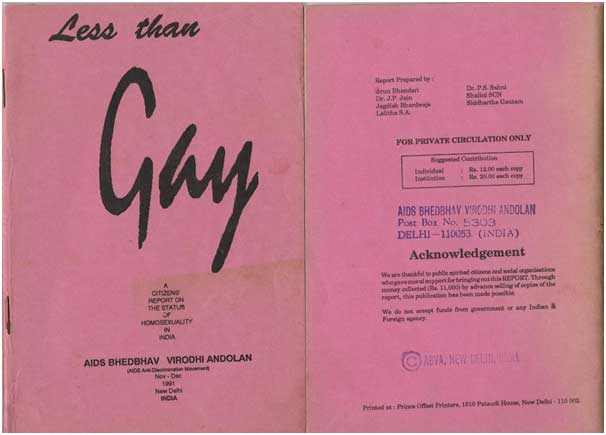
It has been brought to our notice that the official website of LGBT Studies, Yale University states that the Brudner prize 2019-20 is being awarded posthumously to Siddhartha Gautam(SG) for his invaluable contribution to the LGBT struggle in India. SG joined AIDS Bhedbhav Virodhi Andolan (ABVA) briefly for about two years and worked with six other co-authors of Less than Gay: A citizens’ report on the status of homosexuality in India (brought out by ABVA in 1991).
Since the Yale University authorities have neither communicated with ABVA and nor have apparently gone through the official blog of ABVA at: http://aidsbhedbhavvirodhiandolan.blogspot.com/, we would request you to go through the same. It may be mentioned that right since its inception three decades back ABVA has been a non-funded, non-party organization; that none of its members were permitted to avail of sponsored trips abroad; nor to be recipient of any awards. Funds from foreign and government sources were a taboo for ABVA members. ABVA never made money out of commercial publication of its literature. Our reports were sold on no profit, no loss basis; and were always self-published. Those joining ABVA even for a few years were made aware of these principles.
Right at the onset we urge you to scrap Brudner Prize 2019 for the following reasons:
  • SG worked with ABVA for a very brief time, around 2 years. Even during this period he was in and out of Delhi and in and out of India for various reasons.
  • Like all ABVA members SG too had not come out openly about his sexuality. When the report, Less than Gay was released at the Press Club of India of India on 22 November, 1991 SG had consciously recused himself and it was left to other ABVA members to address the Press Conference.
  • The report Lessthan Gay was a collective effort of not just seven co-authors but all other ABVA members. Giving an award to one of the co-authors is stealing, hijacking and subverting the collective work of ABVA. The Committee for LGBT Studies at Yale University which bestows this annual prize does not have the faintest idea of what collective work is; or for that matter the culture of work at ABVA over the last 30 years. No ABVA member has ever accepted any award for work done in the collective. So you are setting a new low through your unilateral action in announcing this award. If you had contacted us earlier with a sufficient notice we would have explained the position to you.
  • SG died in January 1992 within eight weeks of this report being released.
  • SG had not participated in any protest action on LGBT issue organized by ABVA.
  • The petition for repeal of Section 377, IPC in Delhi High Court was filed in 1994 and SG obviously had no role in this contrary to what is being alluded to on your website.
  • The petition sent to Parliament in 1991 when Lessthan Gay was released was drafted by another ABVA member who had over ten years of activist experience of petitioning in Parliament. In fact at that time approaching the judiciary was not in anyone’s mind.
  • Is it ethical, just, fair and intellectually honest to single out one person out of seven co-authors of Less than Gay for the Brudner Prize? The question is of academic importance only since ABVA is against all establishment awards. For us at ABVA the work itself is rewarding.
  • If SG had been alive he would have sued your pants off if you had dared to subvert the work of ABVA – the way you have done in the instant case.
If you care to read the following you would know that a coterie/vested interest came into existence immediately after his death – like vultures descending on a corpse – to disseminate falsehood about the authorship of Less than Gay in spite of the fact that all the seven names of the co-authors were in the book. This shows the sheer audacity and the game plan of these unscrupulous persons. All the ABVA members – 18 to 24 – were extremely pained, traumatized and felt sorry for SG who was an upright ABVA member. (No ABVA member living or dead was part of the coterie/vested interest.)
Just have a look at what Siddharth Dube, a onetime scholar-in-residence at Yale University’s Centre for Interdisciplinary Research on AIDS wrote in his book ‘No One Else’ (2015).
  • There is a reference to the undersigned (Dr. P. S. Sahni) as being the force behind ABVA. (page 192)
  • Again SG has been referred to as the driving force. (pages 207& 266)
  • There is a mention of the power of what SG had set in motion through Less than Gay whichsoon became potently evident. (page 207)
  • A reference is made to the astounding scope of what SG eventually set into motion. (page 190)
We immediately sent a letter to Siddharth Dube stating interalia:
“The ABVA collective sees each and every member of the collective, each and every person in the ‘high-risk group’ amongst whom we work and everyone who supported the collective’s movement as the driving force. Referring to one or two persons as the driving force is unfair to ABVA members, some of whom are dead and who have contributed up to two and a half decades of their life in this work and continue to do so.”
The full details of the aberrations and the presumptuousness of the author may be gauzed in the letter sent to Dube by ABVA. See link: http://aidsbhedbhavvirodhiandolan.blogspot.com/2016/01/abvas-email-to-siddharth-dube-on-his.html
Legal notice was served on the author of ‘No One Else’ and Harper Collins Publishers India.
Right at its inception ABVA had decided to bring out a series of reports on the so called high risk groups viz women in prostitution, professional blood donors, drug abusers, homosexual persons. So the report on homosexuality Less than Gay was a natural corollary to this. Less than Gay would have got written with or without SG like all other ABVA reports totaling eleven in number (including two in Hindi). For details of ABVA’s work and reports please see:http://aidsbhedbhavvirodhiandolan.blogspot.com/2015/02/about-aids-bhedbhav-virodhi-andolan-abva.html
To recapitulate, SG was out of India when a seven-page hand written blue print of the report Less than Gay was drafted by an ABVA member who walked from his residence – out of sheer excitement and to save money – to discuss it with another ABVA member residing seven kms away! This contained outline of the chapters to be included as also the part ‘Why this Report’. The protocol followed was adopted from our earlier citizens’ reports/ fact finding reports published prior to 1988.
Neither Honest, Nor Wise
Decades of our work at ABVA was sought to be subverted and our reputation tarnished through an article published in The Hindu on 15 July, 2018. We decided to fight back and filed a complaint at the Press Council of India (PCI). The decision on our complaint was passed on 29.05.2019 by the PCI whose present Chairman is Justice Chandramauli Kumar Prasad, a former judge of the Supreme Court of India.
The Inquiry Committee heard Ms. Shobha Agarwal, the complainant and Mr. S. Ramanujam for the respondent. The complainant had alleged that the petition challenging the Constitutional validity of Section 377, IPC was filed by ABVA through its member, Ms. Shobha Agarwal, Advocate. It was pointed out that SG died in the year 1992 and the petition was filed in the year 1994 and therefore, the impugned story stating that SG filed the PIL was wrong. The PCI held:
“All those, who write, are bound to make mistakes and for that purpose one keeps erasers but erasers are kept by those who are willing to correct their mistakes. In the opinion of the Inquiry Committee, the editor of “The Hindu” has forgotten this basic principle and without any justification is unwilling to publish the correction in the print edition of the newspaper. Those who say sorry, when they are wrong are honest, those who say sorry when in doubt are wise. In the opinion of the Inquiry Committee, the respondent editor is neither honest nor wise.”
It is also available on the official website of PCI.
Since 2005 onwards a pan India NGO, SAATHII was instrumental in organizing SG Film Festival for about a decade and the literature brought out made patently false and erroneous statements undermining the collective work of ABVA. ABVA sent a communication to the NGO tabulating the statements carried in their literature and factually correct position. Two of the examples are given below:
Wrong statement in SAATHII’s literatureThe factually correct position
ABVA also initiated a petition campaign that helped prevent the passing of the draconian AIDS (Prevention) Bill of 1989. Siddhartha’s work as a lawyer in New Delhi strengthened these efforts.The said petition campaign was initiated much before S.G. became a lawyer. ABVA had members who had a decade’s experience of using parliamentary techniques; their expertise was valuable.
Siddhartha also worked with ABVA to publish a series of well-researched reports on the status of other vulnerable  groups of people like women in prostitution, professional blood donors and drug dependents, …ABVA’s report titled Women And AIDS – Denial and Blame was authored by ten members including S.G. Another report titled Blood of the Professional was authored by just one member, JagdishBhardwaje. The report on drug dependents titled This Sugar is Bitter was conceived and brought out much after S.G.’s death!

The NGO was asked to urgently rectify the mistake which was belatedly done.
The full content of the communication may be seen at:
These are just a few of the attempts by vested interests to subvert the collective work of ABVA; hijacking the work of the collective in the name of SG are condemnable and criminal. This is a blatant violation of ABVA’s intellectual property rights.
You would recall that on May19, 2011 Mr. Didier Eribon had written a letter to John Treat and the members of the Brudner Prize committee at Yale University. We quote:
“With great regret, I am writing to you in order to ask you to withdraw my name from the list of the recipients of the Brudner Prize.
I was greatly honored to be awarded the Brudner Prize in 2008, and proud to see my name included on this highly prestigious list of prominent scholars and activists.
But I’ve just learned that this year’s prize has been given to someone whose last book (David Halperin, What Do Gay Men Want?) shamefully plagiarized my work (a fact that I made public in 2009, and that many reviews of the French translation of the book in question have also made clear).
I wish to register my protest against this choice of yours, which is an offence not only to me, but also to academic, intellectual, political and ethical standards.”
So Yale University has a record of awarding the Brudner Prize to someone who stole another’s work/ intellectual framework/ way of thinking.
ABVA demands Yale University authorities to forthwith:
  • Scrap Brudner Prize 2019
  • Remove all references to Less than Gay including its cover page from its website(s). The report is available only for educational and non-commercial purposes – certainly not to be used as an advertisement for awards, funding etc.
  • Make available to us all the material (as also names of members of the Brudner Prize committee) on the basis of which it was decided to award Brudner Prize 2019 to SG without as much as even informing – forget consulting – the parent organization ABVA.
In the event of Yale University continuing with its unilateral course of action, ABVA will be forced to resort to all methods of redressal including legal ones the responsibility for which would rest entirely on you. Needless to say that you are forcing ABVA to ensure that SG’s name is removed from the records of ABVA posthumously.
Last but not the least Yale University LGBT studies website has spelt our dear ABVA member Siddhartha as Siddartha at one place; and ABVA as ABBVA; likewise the full form of acronym is wrongly mentioned. It shows the level of your research standards. Of course Yale University would be appalled if one were to mention it as Yell University!
Thank you and waiting for acknowledgement, urgent action and response.
Yours sincerely,
Dr. P. S. Sahni
On behalf of ABVA collective
AIDS BhedbhavVirodhiAndolan (AIDS Anti-Discrimination Movement)
Email: aidsbhedbhavvirodhiandolan@gmail.com

Monday, 2 September 2019

ABVA Members – their Struggles and Commitments Prior to Christening of ABVA


Those who had joined AIDS Bhedbhav Virodhi Andolan (ABVA) included Manoj Pande, Dr. Puneet Bedi, Shanta ji, Arun Bhandhari; Shalini SCN, Lalitha S.A.; Dr. J.P. Jain, Dr. Mathew Varghese, Dr. P.S. Sahni; Jagdish Bhardwaje, Yashwant, Shobha Aggarwal, J.S. Kohli, Manjit Singh. Some of these activists had known each other for decades/ several years and had worked together in different campaigns and movements prior to joining ABVA.

-         In 1983 Shanta ji, Yashwant and Dr. P.S. Sahni were members of the Jhuggi Jhompri Niwasi Adhikar Samiti (JJNAS). This organization had dozens of constituent members – individuals/ organizations based in Delhi and Calcutta (now Kolkata). JJNAS was opposed to slum demolitions without rehabilitation of the uprooted people. In 1984 several draconian laws were passed in Parliament to target slum dwellers, treating the latter as criminals and to uproot them at the whims and fancies of those in power. JJNAS opposed these laws; organized a few protest marches; demanded ration cards and voter identity cards for slum dwellers. When one slum dweller, Wilson was tortured to death in a police station on the alleged charge of stealing a ceiling fan, cases were filed not only in the trial court against the policemen involved but also in the Supreme Court.

-         Dr. J.P. Jain, Dr. Puneet Bedi (Gynecologist), Dr. Mathew Varghese (Orthopedic Surgeon), Dr. P.S. Sahni (Orthopedic Surgeon) had studied at Maulana Azad Medical College and associated hospitals, New Delhi during the late 60s and 70s. The latter three doctors were in the forefront of the two month long agitation launched by the Junior Doctors Federation (JDF) of Delhi in 1980 resulting in the strike affecting all the five major public hospitals in Delhi. The strike was called off after an agreement signed between JDF and the Union Ministry of Health and Family Welfare. The demands pertained to pay raise, working hours and future job prospects. During the follow-up of the strike 37 of the two thousand odd striking doctors led by Dr. P.S. Sahni were sentenced to 28 days imprisonment at Tihar Jail, Delhi.
Dr. Puneet Bedi is a rare gynecologist who never performs ultrasonography for sex determination; he never does any unnecessary Caesarian operation, opting to patiently hold on for hours, nay day, for normal delivery to take place. Dr. Mathew Verghese’s commitment to the needy patients is legendary; he spends half his earnings on poor patients. He has earned the epithet of “one among five people from around the world who were real life heroes.”

-         Shanta ji, Dr. J.P. Jain, Dr. P.S. Sahni, Manjit Singh had worked together amongst the victims of anti-Sikh violence in 1984 in various relief camps set up in Delhi. As per Government reports at least 3000 Sikhs were burnt alive in Delhi itself. Manjit Singh, a Sikh by faith, had to have his hair shorn off to escape being burnt alive; within a few days of this violence Manjit Singh had started doing relief work. Manjit Singh was a communist by ideology; though a man of limited means he had a library of progressive literature at his humble house. He practically had all the issues of weekly magazine, Mainstream since its inception!
For 26 months the work undertaken by these four activists involved setting up of medical relief centers, filing of compensation applications; petitions to various authorities; a series of protest actions e.g. rallies to the office of Lt. Governor of Delhi; Delhi Development Authority; Boat Club etc.
Shanta ji as the senior most ABVA member was a source of strength for all ABVA members. She had courageously battled both her personal and political struggles. Dr. J.P. Jain had left his secure and well paid government job to do voluntary work amongst victims of 1984 violence.

-         During the 1988 Cholera epidemic in Delhi Arun Bhandari, Dr. J.P. Jain, Dr. P.S. Sahni were part of the 11 member fact finding team, Nagrik Mahamari Janch Samiti, which brought out a Citizens’ Report, Crime Goes Unpunished. The report became part of the case filed in the Supreme Court demanding fixing of  the responsibility on the guilty officials responsible for the water contamination supplied through shallow ‘pumps of Death’! A large protest demonstration was organized outside the Maulana Azad Medical College, New Delhi, followed by a public meeting at Delhi’s Sapru House. Through Arun Bhandari ABVA’s reports would get distributed to other parts of the country whenever Arun – through his parent organization Ankur – was travelling for a workshop, meeting organized by other social groups outside Delhi; Arun was equally at ease in mobilizing people from Bastis for protests organized by ABVA. He would ensure that the participating people were well versed with the issue at hand.

-         From 1980 onwards Jagdish Bhardwaje, a professional blood donor (who sold his blood for a living) had organized the poorest of the professional blood donors in Delhi for a better deal at the hands of the private and government blood banks. Jagdish Bhardwaje, coming from a middle class background, had hit the pavement in 1981 while at the peak of his personal and professional life. He had suffered huge economic losses in his business and had to dispose off his Greater Kailash-II residence and car in a distress sale. His wife left him along with the only son the couple had. He overcame a spell of severe depression and struggled with his life on the pavement at Jama Masjid, Old Delhi. He found himself amongst people who were forced to earn their livelihood by selling their blood. Later he organized them under the banner of professional blood donors and launched a long agitation at Boat Club – the Hyde Park of Delhi – so that they get better remuneration for a bottle of blood! The organization acquired an all India banner. For about two decades Jagdish himself was selling his blood for a living; at times once a day and even thrice a day on occasions.
In 1990, Jagdish joined ABVA and was actively associated with it for over a decade. A report – Blood of the Professional – authored by him documents the lives and struggles of professional blood donors in India. In a public interest litigation filed by H.D. Shourie titled Common Cause vs. Union of India and Others [Writ Petition (civil) 91 of 1992], the Supreme Court had inter alia banned professional blood donation. Jagdish had filed an intervention application through advocate Laxmi Kant Pandey urging the court to have a rehabilitation policy for professional blood donors in the event the court was likely to ban professional blood donation. Though the judgement delivered on 4 January, 1996 victimised the professional blood donors eventually, Jagdish’s application was not even considered.

-         Yashwant, himself a young leprosy patient residing in a slum area at Tilak Nagar, New Delhi was instrumental in organizing the inmates of this colony, Jagat Matha Kusht Ashram. As they were facing discrimination in their own state of Karnataka (mainly district Bijapur) these leprosy patients had shifted to Delhi in the 1970s to earn their livelihood through begging. Dr. P.S. Sahni started working amongst them after leaving his job at All India Institute of Medical Sciences (AIIMS), New Delhi in December, 1983. Yashwant was active in the panchayat of leprosy patients. Yashwant organized a number of protest actions including at the then national protest site, Boat Club, New Delhi. During one of their most militant protest actions near the office-cum-residence of the then Lt. Governor of Delhi the police resorted to firing resulting in injuries to many of the protesting leprosy patients and death of one of them. One of the leprosy patients, Govind Ram filed a writ petition in the Supreme Court of India on 19 June, 1985. Mrs Kapila Hingorani, senior advocate argued the case.
The petitioner, Govind Ram, aged 80 years, suffering from leprosy with crippling deformities was one of the 7000 persons with leprosy in Delhi and earned few rupees by begging and on this account he often found himself in jail after being arrested under the Anti-begging Act. The petitioner resided at jhuggi no. 26 at this Ashram.
It was submitted that there are 4 million people in India suffering from leprosy; that most of them in Delhi are taken to Remand Home called “Sewa Kutir’at Kingsway Camp which inmates refer to as ‘Danda Kutir’ because of the severe beatings they get there. The petition pointed out that these people suffer from a number of disabilities in the matter of employment, elections, and travel under the laws and more in practice as they are treated worse than untouchables. Moreover with the repeal of the Indian Lepers’ Act, 1898 in Delhi and a few other states, alternate means of rehabilitation and their medical treatment have not been made.
P.N. Bhagwati the then Chief Justice of India and Justice V. Khalid passed an order on 9 September, 1985 asking Union Government and the Law Commission to provide suitable legislation for the treatment and rehabilitation of leprosy patients. The writ petition continued for over 20 years (1985 to 2004). About half a dozen Chief Justices retired while the case was on. The petitioner was thrown in jail after being arrested under the Anti-begging Act; his jhuggi was demolished by Delhi Development Authority; in 1989 he died without any medical treatment and rehabilitation. After 20 years of legal struggle and innumerable court orders a suitable legislation for the treatment and rehabilitation of leprosy patients is yet to see the light of the day.

-         Even before ABVA was christened in 1990 as such three of us – Dr. J.P. Jain, Lalitha S.A. (Joint Women’s Program), and Dr. P.S. Sahni had got together to plan working amongst the commercial sex workers (CSWs) in Delhi’s red light district, G.B. Road. At that time the sex workers were being targeted for forcible HIV testing. Eventually a small dispensary was set up in one of the brothel houses where medicines for common ailments were provided and condoms were distributed. Later Shalini SCN (Women’s Development Program, Indian Social Institute, New Delhi) joined this work. When CSWs realized that a section of the mainstream media had written derogatory things about them, they protested and sent rejoinders to the newspapers. In fact some of them accompanied us to the newspaper offices. When a demonstration was organized at the office of Indian Council of Medical Research, New Delhi on 28 February, 1990 some of the CSWs joined the protest with their faces uncovered.
In 1989, Shobha Aggarwal & few others lawyers had started a Legal Support Group to provide free legal aid to the poor and needy. In 1990, the Delhi Police under the supervision of Deputy Commissioner of Police, Amod Kant arrested 112 women in prostitution and their children on the charge of being ‘neglected juveniles’, under Juvenile Justice Act, 1986. Even after the Juvenile Welfare Board pronounced that none of them were neglected juveniles, the State went in appeal. The appeal was dismissed in March 1995. For five years Shobha Aggarwal, advocate was attending the court regularly as a lawyer for these victims. At times she had to wait in the court room for the whole day. In the first two years more than two hours on every hearing were spent in taking attendance of the women & their children; and warrants of arrests were issued against anyone who was not present. Children had to miss school for attending the court. They were made to stand outside the court room in a line like prisoners while the attendance was taken. The attitude of the judges and the court staff towards the accused was that of a priest towards a sinner. They were granted exemption from appearance only after Shobha had an argument with one of the presiding judges. The case passed through several judges. Not a single one was willing to apply his/her mind to the application for summary dismissal of appeal filed by the police as no appeal was legally allowed under the Act against the order of acquittal by the Juvenile Justice Board. One of the judges who sat on the case – without passing any order for years – was later elevated to Delhi High Court! It took full five years for a judge to dismiss the State’s appeal against the order of acquittal of the women and children.
The net result has been that the police has refrained from indulging in a repeat performance of such brutal raids in later years. The spontaneous public protests by the women concerned after their arrest, and the debate that ensued in the media followed by the protracted legal battle has had a salutary effect on the powers that be.
Lalitha is passionate about her work amongst the CSWs and their children. Her work continues till date. Her humility is unmatched. Shalini, a onetime Christian Nun had to confront, cajole, and convince the Church, the Bishops and the Indian Social Institute to be working courageously amongst the CSWs.

-         Manoj Pande and J.S. Kohli were working with the Service Civil International, India (SCI) when they joined ABVA. Manoj Pande is still active in ABVA’s work; for over twenty-six years Manoj has been the Secretary at Himalaya Seva Sangh, New Delhi. Earlier known as the Border Areas Coordination Committee, the Himalaya Seva Sangh was set up by a number of Gandhian Organizations in 1962 to promote community action for Social and Economic Development in the Himalayan region; to guide, coordinate and promote the activities of voluntary organizations and individual social workers working for socio-economic uplift of the people of that region. It is primarily through the efforts of Manoj Pande that ABVA’s work has reached the remotest parts of the country; wherever he travels during the course of his work he is able to communicate to the local people how non-funded work by ABVA in the last 30 years continues. Both Manoj and J.S. Kohli have participated in ABVA’s protests and have joined hands in bringing out some of ABVA’s reports. ABVA’s protests would begin by slogan shouting led by Manoj Pande in his thunderous voice and the rest would join in slogan shouting. As SCI’s member, rejoinders sent by J.S. Kohli to newspapers supporting ABVA’s actions would be a big boost to the fledgling organization that ABVA was in the making.

When all these 14 activists joined ABVA they brought their lifetime’s experience with them which got reflected in ABVA’s work. Many of them have had a brush with socialism and feminism. Thus in different campaigns, draconian and anti-people laws were being fought against by these activists – whether the laws were against slum-dwellers; against leprosy patients [e.g. Indian Lepers’ Act, 1898 and The Bombay Prevention of Begging Act, 1959 as applicable to Delhi; The Juvenile Justice Act, 1986; The Suppression of Immoral Traffic in Women and Girls Act, 1956 (SITA); Immoral Traffic (Prevention) Act, 1986 (PITA)]. When Supreme Court of India put a ban on professional blood donors, ABVA organized meetings and protests to get the judgement overturned. Jagdish Bhardwaje was the moving spirit in this campaign.

Many of these 14 activists had a very good understanding of the functioning of the Indian Parliament through practical use of its various modalities e.g. raising questions in Parliament; call attention debates; special mention in Parliament; petitioning before committees of Parliament etc. All this was useful to ABVA in its work. Some ABVA members had firsthand experience of being petitioners in the Supreme Court; others had moved subordinate courts during the course of their work. So for this group of 14 activists challenge to Section 377, IPC and its repeal in toto did not present any insurmountable problem. With their political experience it was a natural corollary – except that no member of the sexual minorities agreed to be part of the court case till 31st December, 2000!

Out of these 14 members Shanta ji, Shalini SCN, Jagdish Bhardwaje, Yashwant & Manjit Singh have since passed away. Out of the seven people who prepared the Report Less than Gay six were from the aforementioned 14 members. The seventh person involved in preparing the report was Siddhartha Gautam who had joined ABVA as a law student briefly for about two to three years before he passed away in January, 1992. Even during this period he was out of Delhi to be with his parents in Kolkata; or out of India for treatment in USA. He provided lots of source material on gay and lesbian issues – both Indian and western. This was useful in preparing Less than Gay. As per an understanding no ABVA member – living or dead, including Siddhartha talked about his or her sexuality in public. All constructs to the contrary are an afterthought and only violate the privacy of the person concerned by vested interests.

Many people – who joined ABVA for a few years before venturing out in other fields – helped enrich ABVA’s work: Gauri, then a theatre activist with Alarippu which focused on amateur theatre; A. Srinivas, journalist by profession and rebellious by nature who was eased out of several newspapers every year or so since he refused to compromise with his principles; he ensured that proceedings of the court case filed by ABVA for repeal of Section 377, IPC got reported in The Pioneer. Ashwini Ailawadi introduced ABVA members to the world of drug de-addiction and rehabilitation. He got ABVA members to attend Al-Anonymous meetings scheduled every Wednesday and Saturday in the evening hours to listen to first-hand experience of those who had quit substance abuse for over five years; Anuja Gupta, a teacher of French joined ABVA after her brother Siddhartha Gautam died. Dimple had been involved in women’s movement and lesbian issues. Though a taciturn she was persuaded to speak as the lead speaker in the seminar the ‘Politics of Sexuality’ organized by ABVA in 1992 at Indian Social Institute, New Delhi. Dimple got her friend Renu who worked at a Union Ministry, Govt. of India to join ABVA. D. Dalip joined ABVA and made us aware of how gay men got ‘treated’ at premier medical institutions in the country like AIIMS; the sort of interrogation a gay person was subjected to even if he ventured to go for an HIV testing on his own volition. Teena Gill, a journalist who was working with the Indian Express left ABVA soon after joining due to conflict of interest.   


Thursday, 6 June 2019

Press Council of India Censures The Hindu; Terms Its (Then) Editor Neither Honest Nor Wise On Complaint by AIDS Bhedbhav Virodhi Andolan

by

Shobha Aggarwal

Decades of our work at ABVA, AIDS Bhedbhav Virodhi Andolan (AIDS Anti-Discrimination Movement of India) was sought to be subverted and our reputation tarnished through an article published in The Hindu. We decided to fight back and filed a complaint at the Press Council of India (PCI). The decision on our complaint was passed on 29.05.2019 by the PCI whose present Chairman is Justice Chandramauli Kumar Prasad, a former judge of the Supreme Court of India.
The decision in our complaint is being reproduced verbatim:

“This complaint dated 25.9.2018 has been filed by Ms Shobha Agarwal, Member, AIDS Bhedbhav Virodhi Andolan (ABVA), New Delhi against ‘The Hindu’ for allegedly publishing a factually incorrect and defamatory article against ABVA in its Sunday Magazine, Delhi Edition, issue dated July 15, 2018 captioned “It’s been a long, long time” by Vidya Krishnan, which the complainant alleges have subverted the collective work of the organization.

The alleged impugned news item gives an overview of the development of LGBTQ rights movement in India over the last 25 years and how it gained its momentum. The article under its sub-heading ‘Brave and Prescient’ states that Mr Siddarth Gautam, an LGBTQ right activist, played the pivotal role in filing of the PIL challenging the Constitutional validity of Section 377, IPC for LGBTQ rights for the first time in India and somehow gave all credits to Mr Gautam for giving momentum to the LGBTQ rights movement in India by calling him the first champion of gay rights in India and a co-founder of ABVA organisation. The article also published that Mr Gautam authored a ground breaking pamphlet titled ‘less than gay - a citizens report on the discrimination faced by the community in India. Further, the news article states that after the death of Mr Siddarth Gautam, which happened after few months of publication of the report, ABVA failed to follow through the PIL petition and it got dismissed in 2001.

The complainant alleges that the facts presented in the article are inaccurate and subverts the collective work of ABVA. The petition challenging the Constitutional validity of Section 377, IPC was filed by ABVA titled - AIDS Bhedbhav Virodhi Andolan Vs. Union of India & Others through its Member Ms. Shobha Agarwal, Advocate, after the death of Mr Siddarth Gautam in 1992 and the petition was filed in 1994. Also, Siddarth Gautam's contribution to Gay Rights was only on account of him being one of the co-authors of the Report 'less than gay'. Therefore, Mr Gautam's contribution to the report Less Than Gay was not different from any other co-author of the Report. The Report being called as a pamphlet is again inaccurate as it is a 93 pages Report which cannot be termed as a pamphlet. The complainant further submitted that, the first protest on the issue of gay rights in India was organized by ABVA on August 1992 which the author/reporter of the article has referred to as ineffective and is reflected in the quote 'nothing came of it'. It undermines the work of ABVA and the day 11th August 1992 is still cherished by the LGBTQI groups in India.

The complainant states that the respondent newspaper has published an article that is factually inadequate and ABVA was never contacted before to verify the facts presented in the report. It also alleges that the reporter of the article Ms. Krishna was biased, prejudiced and uninformed about the correct facts of the LGBTQ rights movement in India and her conduct was in complete violation of journalistic ethics. The complainant submitted that a letter dated 10th September 2018 was sent to the Editor of The Hindu and a phone call was also made to the author/reporter of the alleged impugned article to which Ms. Krishnan has apologised but the newspaper has not published the clarification as yet. The complainant appeals that an independent inquiry be held in the matter and the guilty newspaper and journalist may be punished and The Hindu be directed to publish a rejoinder in full and with prominence in the matter.

Written Statement

A Show Cause Notice dated 15.10.2018 has  been  issued to  the  respondent. The respondent vide written statement dated December 26, 2018 submits that  Ms. Krishnan the author/reporter  of the impugned  news item/article  has ceased to be in the employees list by the Hindu as on October 5, 2018 and she was also not authorised to deal with such a complaint on her own. And soon after the receiving of the copy of the complaint which The Hindu found to be legitimate, action has been initiated in the matter and a clarification/ corrections as desired by the complainant has already been published by The Hindu and is up on its website acknowledging the crucial role ABVA played in the publication of the report Less than Gay.  Other desired amendments to the article were also made. The editor of The Hindu also informed the same to the complainant. Therefore, the respondent newspaper has requested for the dismissal of the complaint.

A copy of the written statement received from the respondent was forwarded to the complainant on 31.12.2018.

Counter comments of the Complainant

In response to reply received from the respondent newspaper, the complainant, vide letter dated 10.01.2019, has filed its written statement stating that the written statement of the respondent is silent on many crucial issues and obfuscates the true position. The complainant states that irrespective of receiving letter asking for correction sent to the Readers' Editor of The Hindu, by the complainant, the respondent did not take any action until it received the show-cause notice of Press Council of India and after which the editor of The Hindu made a call to pressurise her to withdraw the complaint by saying that an online corrected version will be published. She further stated that even the corrected version does not do any justice and she feels that she has been harassed by the editor to withdraw the complaint. No apology has been published by The Hindu for the delay and damage it has done to the organisation’s name.  The complainant further stated that the inaccurate report was published in both online and print version so the corrected version with an apology must be published in the same. Therefore, the complainant has requested the Council to take necessary action in the matter.

A  copy  of  the  counter  comments  was  forwarded  to  the  respondent  on 16.1.2019 for information.

Report of the Inquiry Committee

The matter came up for hearing before the Inquiry Committee on 13.2.2019 at New Delhi. Ms. Shobha Aggarwal, complainant, along with Dr. P.S. Sahni, Member ABVA, appeared in person. S. Ramanujam, Regional Manager, The Hindu represented the respondent Editor.

The Inquiry Committee has heard Ms. Shobha Agarwal, the complainant and Mr. S. Ramanujam for the respondent. It is the allegation of the complainant that the petition challenging the Constitutional validity of Section 377, IPC was filed by ABVA through its member, Ms. Shobha Agarwal, Advocate. It has been pointed out that Mr. Siddarth Gautam died in the year 1992 and the petition was filed in the year 1994 and therefore, the impugned story stating that Mr. Gautam filed the PIL, is wrong. The complainant's grievance further is that, a report which consists of 93 pages has been described as pamphlet and further it is not the report by Mr. Gautam and he was only one of the co-authors amongst seven authors who contributed to the report. The complainant has termed the story by the reporter, Ms. Krishnan as biased, prejudiced and uninformed. It has been emphasised by the complainant that the author of the article, Ms. Krishnan has telephonically apologised but the newspaper has not published the clarification as yet.

Written statement has been filed by the respondent, inter alia, stating that soon after the receiving of the complaint, the respondent found the same to be legitimate. Action has been initiated and a clarification/ correction as desired by the complainant has been published by "the Hindu" and is up on its website acknowledging the crucial role that the ABVA played in the publication of the report and other desired amendment to the article was made. When the matter was heard on 13th February 2019, the only grievance that the complainant made was that, the corrections which have been made in the online edition be published in the print edition of the respondent newspaper with an expression of regret.

Mr. S. Ramanujam, who represented "the Hindu" on the said day pleaded for adjournment of the case so as to seek instructions from the editor of the newspaper. The Inquiry Committee acceded to the plea of the respondent and accordingly adjourned the case to 14th February 2019. When the matter was taken up on 14th February 2019, Mr. Ramanujam produced before the Inquiry Committee the written submission signed by the editor of the newspaper. In paragraph 9 of the said written submission, it has been stated as follows:

“With due respect, Sir, I feel the demand for an apology or a rejoinder is unjustified and I am not inclined to accept this, given the circumstances. However, I do apologise for the PCI's show cause notice having gotten misplaced, which led to the delay in submitting a reply to us (dated December 26, 2018)”

The Inquiry Committee has bestowed its consideration to the rival submission and is of the opinion that refusal to publish the correction in the print edition of the newspaper shows nothing but an act of arrogance of the Editor of the newspaper. It is an admitted position that the impugned news story was published in the print edition of the respondent "The Hindu". When the respondent has chosen to make corrections in the online edition, the Inquiry Committee does not find any justification not to do so in the print edition when the errors and omissions are one and the same. Clause 13 of Norms of Journalistic Conduct reads as follows:

“When any factual error or mistake is detected or confirmed, the newspaper should suo-motu publish the correction promptly with due prominence and with apology or expression of regrets in a case of serious lapse.”

The Norms of Journalistic Conduct provides for correction promptly with apology or expression of regret suo-motu.

What to talk about suo-motu, newspaper has refused to publish it even when it was brought to its notice.

All those, who write, are bound to make mistakes and for that purpose one keeps erasers but erasers are kept by those who are willing to correct their mistakes. In the opinion of the Inquiry Committee, the editor of "The Hindu" has forgotten this basic principle and without any justification is unwilling to publish the correction in the print edition of the newspaper. Those who say sorry, when they are wrong are honest, those who say sorry when in doubt are wise. In the opinion of the Inquiry Committee, the respondent editor is neither honest nor wise.

Accordingly, the Inquiry Committee has no option than to Censure the respondent newspaper. A copy of this order be forwarded to the Director General, DAVP, District Magistrate, Chennai, Director, Information & Public Relations Department, Chennai for information & appropriate action.

Held
The Press Council on consideration of records of the case and report of the Inquiry Committee accepts reasons, findings and adopts the report of the Committee and decides to Censure the respondent newspaper with the above direction.”

Binu Mathew, editor, Countercurrents.org has constantly been asking readers: Are you fed up with the mainstream media? Need an alternative insight? The answer to both questions is always a yes!

Post Script: Mr. Mukund Padmanabhan was the editor of The Hindu during the relevant period.