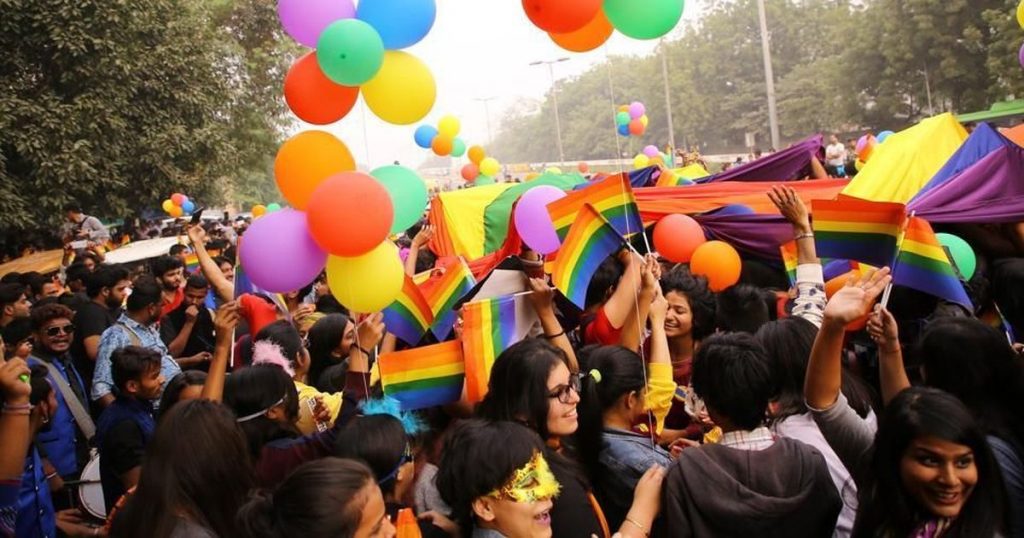
Featured post

Press Release: Release of second edition (digital) of ‘Less than Gay’ – A Citizens’ Report on the status of Homosexuality in India

    The AIDS Bhedbhav Virodhi Andolan (ABVA) is releasing the second edition of ‘ Less than Gay ’ – A Citizens’ Report on the status of Homo...

Tuesday, 4 May 2021

COVID-19 Pandemic India: Needed A Citizens’ Justice Committee To Fix Responsibility


by

P. S. Sahni


First the personal facts briefly:


I obtained MBBS degree dated 15th February, 1975 from University of Delhi.

Obtained Master of Surgery (Orthopaedics) degree dated 23rd March, 1979 from University of Delhi.

Worked in Bihar in 1975 in the Small-pox Eradication Programme under the joint Govt. of India-WHO Project. Testimonial dated 6 February, 1975.

Worked as Senior Research Fellow in an ICMR project from 26.11.81 to 30.11.82 under Dr. B. P. Yadav at Safdarjung Hospital, New Delhi.

Worked as Research Associate in an ICMR Project from 27.12.82 to 29.12.83 under Dr. S. K. Verma at AIIMS, New Delhi.


Work experience amongst 5 epidemics over a period of 5 decades:


1.  In 1971, worked amongst refugees from Bangladesh at the Indo-Bangla border. Cholera epidemic was in rage amongst the refugees. A group of medical students from Delhi (including me) had set up a dispensary right in the middle of this camp.

2.     In 1975 worked in Bihar in Small-pox Eradication Programme under a joint Govt. of India-WHO Project. Work involved moving on bicycle from village to village vaccinating all residents; and quarantining those afflicted with Small-pox in their village hut itself.

3.  In 1988 worked during the Cholera epidemic in Delhi as a member of Nagrik Mahamari Janch Samiti. We had documented the work in a Citizens’ Report: “Crime Goes Unpunished.” The Supreme Court of India took cognizance of the Report.

4.    As a co-founder of ABVA (AIDS Bhedbhav Virodhi Andolan) we were one of the first organizations to work during the AIDS pandemic in India. The work started in 1988 and continues till date. We documented our work through a series of Citizens’ Reports available on ABVA’s blog.

5.   As a member of Nagrik Mahamari Janch Samiti worked during the Plague epidemic in Delhi (September-October, 1994) and documented our work in a Citizens’ Report: “Is Plague Over?”


During 2020 (January to September), we had written a series of articles – 18 in all, including 5 co-authored with my colleague Shobha Aggarwal – on COVID-19 Pandemic which were duly published in Countercurrents.org. We had demanded then:

“… the politicians and bureaucrats in the Union Ministry of Home Affairs; as also Health and Family Welfare; and top-most doctors in the Indian Council of Medical Research as well as the All India Institute of Medical Sciences, New Delhi should be asked to submit their resignations.”


However since early this year, the acts of omission & commission by the politicians – the full spectrum from all parties – has resulted in unprecedented surge in COVID-19 cases! Media reports indicate India registered 408,331 new infections and 3523 COVID deaths on 30 April, 2021! All political parties who fought the recent assembly elections maintained a deathly silence over the large election rallies.


By February, 2021 the number of cases reported per day in India had declined to a few thousand; the number reached about 11,000/day by 11-12th March, 2021. Medical scientists at ICMR & AIIMS would have learnt by then that a resurgence is at hand.


Either these medical personnel failed to grasp the available medical intelligence about the doom that awaited the country; or they were aware but did not have the courage to tell the truth to their political masters.


These scientists needed to urge the Indian Govt. to:

i.   Suspend the Kumbh mela where finally over 9.1 million pilgrims (official data) participated. This warning should have gone by 11-12th March for immediate action. Only symbolic ceremony – with full precautions – should have been allowed respecting the religious sentiments of the majority community.

ii.    Ensure that large gatherings at rallies during the assembly elections in 5 states were prohibited.


On both these counts the action was too late and too little to be of any consequence.


As one of the few living doctors to have worked (in the affected community & not in AC offices in metropolis) in epidemics since 1971, I feel the ‘sarkari’ medical experts let the people down. No one has owned up. No one has been punished.


A small personal protest


As long as I live I’ll never use the prefix ‘Dr.’ with my name. This is a personal, principled protest against the ‘sarkari’ (read ‘durbari’) medical experts; a section of bureaucracy and politicians of all hues (opposition as well as ruling party).


First published:  https://countercurrents.org/2021/05/covid-19-pandemic-india-need-a-citizens-justice-committee-to-fix-responsibility/

Saturday, 27 February 2021

PRESS RELEASE


ABVA is releasing the digitized version of its 58-paged document titled:

 “endless and sickening therapies for AIDS

A Citizen’s report on Anti-AIDS drugs and the threat to public health”


This Report was originally published (hard copy) in January, 2002 and is being made available in digitized version now due to its relevance in the wake of COVID-19 pandemic; many anti-AIDS drugs are being used to manage coronavirus infection. ABVA reiterates that no lessons appear to have been learnt by the international medical establishment, from (mis-)management of past pandemics. ABVA feels the urgent need to stress some very basic issues constantly being dodged by the medical profession under pressure from the governments in power globally. The international bodies like WHO, World Bank, United Nations etc preside over such a state of affairs every time a new pandemic strikes humanity. Ivan Illich elucidated in 1976:


“The study of the evolution of disease pattern provides evidence that during the last century doctors have affected epidemics no more profoundly than did priests during earlier times. Epidemics came and went, imprecated by both but touched by neither. … Discussion of the future of health care might usefully begin with the recognition of this fact.”


Yet both the political class and the medical professionals ignore this fundamental point as they want to be seen doing something demonstrably before the public gaze; and appear to be in control of such pandemics! It is their collective arrogance and ignorance which drives them to this disastrous path.


A crucial question is: Can Medicines Control Epidemics?


Ivan Illich reminds:


“Medicines have always been potentially poisonous, but their unwanted side-effects have increased with their power and widespread use. … drugs contribute to the breeding of drug-resistant strains of bacteria.” And:


“The pharmaceutical invasion leads him (man) to medication, by himself or by others, that reduces his ability to cope with a body for which he can still care.”


What are the lessons to be learnt from the National Tuberculosis Control Programme adopted in India as advocated by the WHO in 1964? Professor MPS Menon reminded us as early as 1983:


“Presently we have about 10 million TB cases in India. Every year five lakh people die of TB and another five lakh get fresh infection. There is the problem of drug resistance too. This pathetic situation exists despite the fact that there is a vaccine against TB (BCG vaccination programme started in India in 1948); investigations and detection of TB cases are done free of cost; and drugs are supplied to patients free of cost in hospitals and clinics, and if need be at their doorsteps.”


Resistance to anti-T.B. drugs is a global problem. It was not until the early 1990s, however, when outbreaks of multi-drug resistance T.B. were reported in patients with HIV infection in USA and Europe that the problem received international attention.


The T.B. bacteria developed resistance to drugs used earlier; newer, costlier and more toxic drugs came into existence for dealing with drug resistance bacteria; resistance has developed again for even these drugs. This process continues taking its toll on human bodies. The biggest beneficiary of this trade in human misery are the transnational corporations.


Significantly the T.B. bacteria has learnt to escape the onslaught of these drugs by camouflaging its ‘appearance’. It lies dormant, thus, in the normal cells of the human body for years – nay decades. It only causes the disease when the body’s immune system becomes weak. Administering stronger medicines (principally antibiotics) may actually harm the human body; weaken its immune system while the T.B. bacteria merrily lies dormant inside a normal human cell waiting for the right opportunity to attack.


Did the Indian Government have an alternative to tackling Tuberculosis through chemotherapy?


“Prof. J. R. Bignall of the Institute for Chest Disease (Brompton Hospital, London) was requested by the Indian Government in 1956 to study the extent of Tuberculosis in the country. The anti-TB drug situation at that time was pathetic with very few drugs trickling into the country and being abused even by quacks. Dr. Bignall wrote to the government suggesting that the 2.5 lakh odd TB patients in the country at that point of time should be allowed to have conventional forms of treatment. The use of anti-TB antibiotics should be banned in the county for 10 years, he said as his reasoning was that those who die of the disease would die anyway and take the germs with them to be burnt or buried, ending the germ’s life cycle. For the rest of the patients who survive, their immune system would kill the germs. In the following decade India would have been rid of TB germs.


“With hindsight it looks like God’s advice. That advice could have worked even for the West. The report was ridiculed in the Parliament and rejected. The results are there for all of us to see.” (The Hindu, June 3, 2001)


Management of AIDS pandemic as also COVID-19 should have been on similar lines.


Globally governments ignored the T.B. experience with medication and repeated the same folly vis a vis the AIDS pandemic. HIV is still around even forty years after the pandemic started. Ironically when COVID-19 pandemic appeared many drugs used for AIDS were administered for coronavirus infection!!


Marc Lappe in The Tao of Immunology, 1997 philosophizes:


“The lesson here may be profoundly important. As with the Taoist adage about responding to an enemy’s advances, "Force should never be opposed by force,"it may be that sometimes the best use of the immune system is to call on it sparingly. As evolutionary biologist S. Ohno of the University of California Davis has declared, "To attack infected cells in which viruses are in the quiescent state of symbiosis with the host is the ultimate folly."


Until we accept that the immune system’s response to some invasions is accommodation rather than eradication, we will be doomed to fight a never-ending battle against near-invisible enemies. If the immune system's way to "win" is to relent, then perhaps we could learn to do the same. As the Tao-te Ching says, "That which is most yielding can overcome that which is most strong."


The lessons to be learnt is that human kind has to live in peaceful coexistence with bacteria, virus, fungi etc. The penchant to wipe out microorganisms through medications needs to be kept in abeyance.


WHO has already sounded a grim warning:


“All current antiretroviral drugs, including newer classes, are at risk of becoming partly or fully inactive because of the emergence of drug-resistant virus strains. If not prevented, HIV drug resistance can jeopardize the efficacy of antiretroviral drugs, resulting in increased numbers of HIV infections and HIV-associated morbidity and mortality.” [From WHO website on HIV Drug Resistance accessed on 26.02.2021 at 2.25p.m.]


The full report can be read here:

https://drive.google.com/file/d/10AFVnity8oJ9MiDTBcp5JkdfEOSa9awR/view


Friday, 25 December 2020

ABVA's Reports

ABVA is in the process of digitizing its Citizens’ Reports brought out over the years. Following reports have already been digitized and can be read here:


1.   WOMEN & AIDS - DENIAL AND BLAME, 1990


2. AIDS & MANAVA ADHIKARON KA SANKAT (Hindi)


3.  BLOOD OF THE PROFESSIONALS, 1991

(A Report on the Exploitation of Professional Blood Donors by the Blood Banking      System in India)


4.   LESSTHAN GAY, 1991

(A Citizens’ Report on the Status of Homosexuality in India)


5.   THIS SUGAR IS BITTER, 1992

(A Citizens Report on the Status of Chemical Dependents and HIV Infection in India)


6.   VICTIMS’ VERSION, 1993.

(A citizens’ report on violence committed primarily against the Muslims of Seelampur, Delhi on 11 Dec 1992)

(A Citizens Report on the Status of Travellers with HIV/AIDS)

(A Citizens’ Report on the BIV Vaccine Trials In India)


9.  FOR PEOPLE LIKE US, 1999

(A Report of the fact finding team which enquired into the attempted suicide of Mamata and Monalisa in Cuttack, Orissa, India in 1998)


10. HUM JAISE LOG (Hindi)


11. endless and sickening therapies for AIDS

    (A Citizen’s report on Anti-AIDS drugs and the threat to public health)

Thursday, 24 December 2020

Press Release: ABVA releases digitized version of its Report ‘For People Like Us'


AIDS Bhedbhav Virodhi Andolan (ABVA, AIDS Anti-Discrimination Movement) is releasing digitized version of its March 1999 document titled ‘For People Like Us” – A Report of the fact finding team which enquired into the attempted suicide of Mamata and Monalisa in Cuttack, Orissa, India in 1998. In deep friendship for five years they had signed a Deed of Agreement before the Notary to remain as life partners. This is the first detailed enquiry report by a citizens group into an attempted lesbian suicide in India. Such cases continue to be reported despite the Supreme Court judgement of 2018 decriminalizing consensual adult homosexual act in private. Till date neither the Indian Parliament nor the Supreme Court of India have shown the courage to legitimize same-sex marriage.


The full report can be read here.


Shobha Aggarwal

On behalf of ABVA

Email: aidsbhedbhavvirodhiandolan@gmail.com


Saturday, 5 September 2020

Indian Parliament Must Apologize for Stonewalling Debate on Gay & Lesbian Issues Since Independence

 By Dr. P. S. Sahni & Shobha Aggarwal

  • The rights of people with different sexual orientations – Lesbian, Gay, Bisexual, Transgender, Queer, Intersex, Asexual needs to be respected; all the laws that criminalise or discriminate against the LGBTQIA community should be abolished. India should pass laws that allows marriage among same sex and LGBTQIA communities.

–          A People’s Manifesto for Ecological Democracy by Countercurrents Collective released on August 15, 2020

  • The remedy against § 377 lies with the people through their Parliament, and not in the courts.

Since 1988-89 ABVA (AIDS Bhedbhav Virodhi Andolan) has been sending petitions to the Indian Parliament pertaining to all the alleged high risk groups for AIDS including gay community. The very first petition was addressed to the Speaker, Lok Sabha urging that the AIDS Prevention Bill, 1989 be not passed by Parliament as it stigmatized and scapegoated inter alia the gay community. The petition reached the then Chairperson of the Petitions Committee, Mr. Atal Bihari Vajpayee who sent a reply letter asking ABVA to give evidence in support of its contention. We duly complied and campaigned with 100 odd groups all over the country to object to the gay community and alleged other high risk groups being targeted by the proposed Bill. Within two years the Bill was withdrawn.

When ABVA released the report “Less than Gay” in November 1991 a petition was sent to the Petitions Committee appealing that the charter of demands (later referred to as the Gay Manifesto) be debated in Parliament and that Section 377, Indian Penal Code (IPC) should be repealed in toto. A number of similar minded groups affixed our petition with a covering letter urging for the same demand. No reply was received by ABVA nor did any debate take place in Parliament during the five year period of the government in power i.e. till 1996.

We at ABVA were absolutely clear that ultimately it is the people’s representatives in Parliament who will have to address the issue threadbare – shedding coyishness aside – and give justice to the gay and lesbian community as also the transgender community who till then had not even got the identity of the third sex. This happened through the NALSA judgement delivered by the Supreme Court (SC) in 2014. True in 1994 ABVA had filed a petition in the Delhi High Court asking for inter alia striking down of Section 377 IPC in its totality. For seven years we campaigned with the petition all over the country to sensitize activists on the issue and enlist support. We urged all groups to file similar petitions in their respective state’s high courts. The idea was to ensure that a section of the media would disseminate ABVA’s message which might reach the Members of Parliament. Not even one Member of Parliament (MP) – not even the communists/socialists – raised the issue in that forum. On the contrary a few organization related to the communists were even actively opposing the issue of sexual minorities. However we continued with our attempts because we could not come to terms with the fact that Parliament would refuse to even debate the issue since the time the country achieved its independence. We were clear that courts could at best provide a narrow, legalistic relief only.

Overtime we were sending letters to major political parties ahead of general and state elections with the ardent hope that the issues of sexual minorities would find place in their political manifesto. This happened to some extent only in the last general elections. We had even addressed open letters to Sonia Gandhi, Rahul Gandhi and Parliamentarians since 2014. There was masterly inactivity on behalf of all of them. In all fairness Mr. Shashi Tharoor, MP brought a private member’s Bill a few times in Lok Sabha during 2015 to 2018 to replace Section 377, IPC and to decriminalize consensual adult homosexual acts. Not surprisingly the Bill was not even allowed to be introduced in Lok Sabha principally by the vehement opposition of the BJP MPs. Overtime some noises in favour of gay community were made by Mr. Arun Jaitley, BJP MP, who opined that their human rights have to be respected. At least the issue of rights of transgender community have figured in Parliament in last decade or so and the Transgender Persons (Protection of Rights) Act, 2019 got passed; it is with the gay and lesbian issues that Parliamentarians cutting across all parties and ideologies have a problem. It is ironical that a country which boasts of Kama Sutra – which has a full chapter on gay sex – and which has been authored by an establishment person, Vatsyayana feels shy of discussing gay and lesbian issues affecting all aspects of their lives viz marriage, adoption, property rights; educational and job opportunities (full details in Gay Manifesto). Why, even Khajuraho temples – by all means Hindu and Jain ones – famous for their erotic sculptures show in full details the sexual act between two men and two women.

Under the Indian Constitution and Parliamentary Procedure and Practice there is no way a call attention debate can be disallowed on gay and lesbian issues. Only one MP needs to give a simple notice asking for such a debate to take place. In practice it is better if four or five MPs send separate notices. The Speaker / Chairperson can fix a day and time for the same. It is no one’s case that the entire Gay Manifesto be accepted. If after 73 years of independence the Indian Parliament refuses to let such a debate take place where should the eighty million people belonging to sexual minority go for redressal. It may be recalled that the then Chief Justice of India while delivering the judgement modifying Section 377 IPC to exclude consensual adult homosexual acts from its ambit had taken a clear stance that the apex court would not be taking up the issues of marriage, property rights and so on. The minor concession by the court should not lead to complacency within the gay and lesbian community. The struggle for equality in all spheres of life – publicly and not just in private – must continue.

Occupy Parliament Street

The only option left for the gay community is to mobilize all civil society organizations, come under a common coalitional umbrella organization and Occupy Parliament Street indefinitely. All participants should be prepared for coercive action of the administration and the police. There is no substitute for struggle and non-party political action; this needs to be stressed on the second anniversary of the SC judgement.

Bob Dylan’s inspiring lines come to mind:

“… Come senators, congressmen
Please heed the call
Don’t stand in the doorway
Don’t block up the hall
For he that gets hurt
Will be he who has stalled
There’s a battle outside and it is ragin’
It’ll soon shake your windows and rattle your walls
For the times they are a-changin’ …”


First published: https://countercurrents.org/2020/09/indian-parliament-must-apologize-for-stonewalling-debate-on-gay-lesbian-issues-since-independence/

Friday, 4 September 2020

Constitutionality of Section 377, Indian Penal Code – A Case of Misplaced Hope in Courts


CONSTITUTIONALITY OF SECTION 377,

INDIAN PENAL CODE – A CASE OF MISPLACED HOPE IN COURTS

M.P. Singh[1]

Amidst strong reactions against the decision of the Supreme Court in Suresh Kumar Koushal v. Naz Foundation, this paper argues that the Court has done all that it is expected to do under the Constitution and the law established under it. The respondents, especially the Union of India, have unsuccessfully asked it to do what the Constitution does not expect it to do. The remedy against § 377 lies with the people through their Parliament, and not in the courts.

“I often wonder whether we do not rest our hopes too much upon constitutions, upon laws, and upon courts. These are false hopes; believe me, these are false hopes. Liberty lies in the hearts of men and women; when it dies there, no constitution, no law, no court can save it; no constitution, no law, no court can even do much to help it. While it lies there, it needs no constitution, no law, no court to save it.”

—Judge Learned Hand, The Spirit of Liberty[2]

I. INTRODUCTION

Before contextualising the foregoing statement, in view of sharp

reactions to my comment on the decision of the Delhi High Court,[3] let me clarify that I am neither insensitive to the issues of LGBTs or LGBTQs, nor am I opposed to their claim for rights and liberty in their private and personal lives. As a student of constitutional law, my limited concern is to examine whether the courts have the power to invalidate § 377 of the Indian Penal Code (‘IPC’). In my understanding of the Constitution and its interpretation, the courts lack the power to invalidate the section.[4] I am not surprised that on appeal in Suresh Kumar Koushal v. Naz Foundation (‘Koushal’)[5], the Apex Court has also come to the same conclusion.

Sharp reactions against Koushal in the mass media and a few aca-

demic writings reminded me of the above mentioned words of Judge Learned Hand which he spoke to a gathering of United States citizens at the Central Park of New York towards the end of World War II. A few days after Koushal, I chanced to watch a meeting of a group of LGBTs at Delhi University campus during which, following expressions of disappointment and anger against the decision by several speakers, the convener of the group said something similar to what Judge Learned Hand had said. He asked his co-workers and the audience not to rely too much on the courts. The rights of LGBTs could not be realised through court decisions, he said; they required an attitudinal change in the society at large, which was possible only by informing and enlightening people about the legitimacy of their claims. In Koushal, the Supreme Court also seems to be expressing a similar view when in response to some allegations of discrimination by the first respondent – Naz Foundation – it says: “These details are wholly insufficient for recording a finding that homosexuals, gays, etc. are being subjected to discriminatory treatment either by the state or its agencies”.[6]

II. ANALYSIS OF THE ROLE OF THE

GOVERNMENT AND THE COURT IN THE PRESENT CASE

While the outrage in the media and amongst legal scholars is un-

derstandable, the claims of the Attorney General induced by the Government of the day, first to only assist the Court in the hearing of the appeal and later for the review of the decision, are unprecedented and unprincipled. The government is expected to honour and defend the Constitution as much, if not more, as the Court and to insert and retain in the statute book only such laws which it considers constitutional, and to ask the Attorney General to defend them against any challenge before the courts. In Koushal, on the contrary, the government admits its law to be unconstitutional, and instead of removing it from the statute book, asks the Attorney General to get it struck down by the Court. How strange is it that a government which often blames the courts of overreach and excessive interference with laws and policies, unprecedentedly asks the Court to invalidate a legislation, which the Constitution allows to “continue in force…until altered or repealed or amended by a competent legislature or other competent authority”?[7]

 A CASE OF MISPLACED HOPE IN COURTS 571

At one point of time, the Attorney General asked the Court to hold

that not only liberties but even life of any person could be taken by the petty police officers without any procedure established by law.[8] It is incomprehensible that the Attorney General now expects the Court to invalidate a law which has remained unaltered in the statute book for over one hundred and fifty years, including sixty four years since the commencement of the Constitution. Except in a federal arrangement where the Centre and the States can challenge each other’s laws on the ground of encroachment in the jurisdiction of one by the other, only an individual or a group of individuals who perceives an unconstitutional encroachment on their rights or interests by such laws are entitled to get them invalidated by the courts.[9] Even in this limited field, Justice Holmes advised that the nation could not come to an end if the courts lost the power to declare federal legislation unconstitutional but it could be imperilled if the courts could not make that declaration as to the laws of several states.[10] The Attorney-General’s approach in the present matter implies the government’s lack of both confidence in itself and faith in democracy – the cornerstone of the Constitution and one of its basic features – and expects the courts to do what the Constitution assigns to the people’s elected representatives. It amounts to subversion of the Constitution and beginning of the end of our liberty.

As custodian of the Constitution, the Court in Koushal, on the

other hand, has performed its job of protecting and preserving the Constitution from this kind of unexpected and unacceptable design of the government in refusing to invalidate or even read down § 377 of the IPC. Admitting its plenary power of judicial review, it clarified that “keeping in mind the importance of separation of powers and out of sense of deference to the value of democracy that parliamentary Acts embody, self-restraint has been exercised by the judiciary when dealing with the constitutionality of laws”.[11] Alluding to the presumption of constitutionality and the doctrine of severability, the Court admitted that “[d]eclaring the law unconstitutional is one of the last resorts taken by the courts”[12] and they “would preferably put into service the principle of ‘reading down’ or ‘reading into’ the provision to make it effective, workable and ensure the attainment of the object of the Act”.[13] Applying these principles to § 377 of the IPC, which has survived as such ever since the making of IPC even though it has been amended about thirty times and the Law Commission recommended its deletion, the Court concluded:

“It is, therefore, apposite to say that unless a clear constitutional violation is proved, this Court is not empowered to strike down a law merely by virtue of its falling into disuse or the perception of the society having changed as regards the legitimacy of its purpose and its needs”.[14]

On examining the prosecutions and convictions under § 377 of

the IPC in the light of these principles, the Court found that all these cases related to “non-consensual and markedly coercive situations and keenness of the Court in bringing justice to the victims who were either women or children cannot be discounted while analysing the manner in which the section has been interpreted” and expressed its doubt “whether the court would rule similarly in a case of proved consensual intercourse between adults”.[15] However, going by the plain meaning and legislative history of the section, it held “that § 377 of the IPC would apply irrespective of age and consent”.[16] The Court further clarified that:

“Section 377 IPC does not criminalise a particular people or identity or orientation. It merely identifies certain acts which if committed would constitute an offence. Such a prohibition regulates sexual conduct regardless of gender identity and orientation”.16

The Court also found that the petitioners before the Delhi High Court did not produce adequate proof of the fact that “homosexuals, gays, etc. are being subjected to discriminatory treatment either by the State or its agencies or the society”.[17] In my view, even if discrimination by society is established, invalidity of § 377 will not help LGBTs because the section empowers the state or its agencies to take action and not the society.

On the question of discrimination, relying upon the established

law, the Court came to the conclusion:

“Those who indulge in carnal intercourse in the ordinary course and those who indulge in carnal intercourse against the order of nature constitute different classes and the people falling in the latter category cannot claim that § 377 suffers

 A CASE OF MISPLACED HOPE IN COURTS 573

from the vice of arbitrariness and irrational classification.… Therefore, the High Court was not right in declaring § 377

IPC ultra vires Articles 14 and 15 of the Constitution”.[18]

The miniscule population of LGBTs and the fact that there were

less than 200 prosecutions, also weighed in the mind of the Court in rejecting the plea of invalidity under Articles 14, 15 and 21.[19] I need not repeat what I had said in reaction to the Delhi High Court decision in arriving at the same conclusion.[20] Contrary to my understanding of the judicial decisions and their application, the Court read substantive due process in the combined reading of Articles 14, 19 and 21. But without arriving on any conclusion on that issue, even on the allegations of torture, harassment and blackmail of LGBTs on account of § 377, it held that “this treatment is neither mandated by the section nor condoned by it and the mere fact that the section is misused by police authorities and others is not a reflection on the vires of the section”.[21] Mere possibility of abuse of law, the Court observed, does not per se invalidate a law.

Professor Baxi has strongly argued against the understanding and

application of Article 14 by the Court to different kinds of sexual acts,[22] but as I have said before, until a bench of nine judges changes the existing law on Article 14, the smaller benches are bound by the decision.[23]

Finally, on the question of foreign precedents and laws, the Court

expressed “grave doubts about the expediency of transplanting Western experience in our country”.24 Citing the example of the death penalty and the Law Commission’s views on it and some cases in which the Court has cautioned against being blinded by foreign precedents, the Court concluded that “§ 377 IPC does not suffer from the vice of unconstitutionality”.[24] It further stated that “the competent legislature was, however, free to consider the desirability and propriety of deleting § 377 IPC from the statute book or amend the same as per the suggestion made by the Attorney General”.26 I add that, on the lines of Justice Holms’ advice cited above, the Court shows due deference to major pre-Constitution codes and Acts of Parliament. Even § 303 IPC was invalidated because it encroached upon the judicial power. All other challenges have uniformly been rejected. In the United States of America, same sex relationships in State laws have been the subject matter of litigation[25] and in most other jurisdictions in the West, change has been brought by legislation.

III. CONCLUSION

To conclude, in Koushal, the Court has lived by its dharma of

upholding the Constitution and the laws consistent with it even in the face of government’s collusion with the respondents. The stand of the government has, however, gone against its dharma of defending its laws or to repeal them if it considers them to be unconstitutional. The media and scholars must enlighten the people, including the legislators, about the plight of LGBTs and the injustice, if any, to which law subjects them instead of pinning all the hopes in the courts.[26]


[1] Chancellor, Central University of Haryana. Formerly, Professor of Law and Vice-Chancellor, W.B. National University of Juridical Sciences, Kolkata, India and Professor of Law, University of Delhi.

[2] Judge Learned Hand, The ‘Spirit of Liberty’ Speech presented during the annual ‘I am an American Day’ event (May 21, 1944).

[3] Naz Foundation v. Govt. (NCT of Delhi), (2009) 160 DLT 277.

[4] See M.P. Singh, Decriminalisation of Homosexuality and the Constitution, 2 NUJS L. Rev. 361 (2009).

[5] (2014) 1  SCC  1.

[6] Id., ¶ 63. The expression ‘the society’, which I have omitted from the quote, in my view, means society as an organisation as opposed to families and small groups of people.

[7] Constitution of India, 1950, Art. 372. The continuation is, however, subject to the Constitution.

[8] See ADM, Jabalpur v. Shivakant Shukla, (1976) 2 SCC 521. For some revealing details see

H.R. KHaNNa, NeitHeR RoSeS NoR tHoRNS 82 (2010).

[9] The statement may be read subject to the practice of public interest litigation, in which any person or body of persons having sufficient interest in the matter may also approach the courts for the invalidation of laws.

[10] See O.W. Holmes, Law and the Court in CoLLeCted LegaL PaPeRS 295 (1920).

[11] Suresh Kumar Koushal v. Naz Foundation, (2014) 1 SCC 1, ¶ 32 (emphasis supplied).

[12] Id., ¶ 40.

[13] Id., referring to and relying upon the principles laid down in Namit Sharma v. Union of India, (2013) 1 SCC 745. See also summarised version of the principles at Suresh Kumar Koushal v. Naz Foundation, (2014) 1 SCC 1, ¶ 44.

[14] Suresh Kumar Koushal v. Naz Foundation, (2014) 1 SCC 1, ¶ 46.

[15] Id., ¶ 60.

[16] Id. 16 Id.

[17] Id., ¶ 63.

[18] Id., ¶ 65.

[19] Id., ¶ 66.

[20] See Singh, supra note 3, 361.

[21] Suresh Kumar Koushal v. Naz Foundation, (2014) 1 SCC 1, ¶ 76.

[22] Upendra Baxi, Naz 2: A Critique, 49(6) EPW (February 8, 2014).

[23] See Singh, supra note 3, 361, 371, 380 as well as the discussion on reasonableness in Natural Resources Allocation, In re, Special Reference No. 1 of 2012, (2012) 10 SCC 352. 24 Suresh Kumar Koushal v. Naz Foundation, (2014) 1 SCC 1, ¶ 77.

[24] Id., ¶ 80. 26 Id., ¶ 82.

[25] However, the United States Supreme Court, by a majority of 5 to 4, has invalidated a federal law which for claiming tax benefits, defined marriage only between a man and a woman. The reasons for such invalidation were multifarious, though the main reason appears to be the violation of liberty without due process of law that included equal protection of laws also. See United States v. Windsor, 186 L.Ed 2d 808: 570 US 12 (2013).

[26] At the time of writing this comment, elections were due for Parliament. The people could have asked the political parties to include the demand for repeal of §377 in their manifesto as the Communist Party of India (M) did or after the constitution of new Parliament they should ask their elected representatives to repeal that section.


Reproduced from NUJS Law Review for educational and non-commercial purposes. Cite as: M.P. Singh, Constitutionality of Section 377, Indian Penal Code – A Case of Misplaced Hope in Courts, 6 NUJS L. Rev. 4 (2013)

Link: http://nujslawreview.org/2016/12/04/constitutionality-of-section-377-indian-penal-code-a-case-of-misplaced-hope-in-courts/